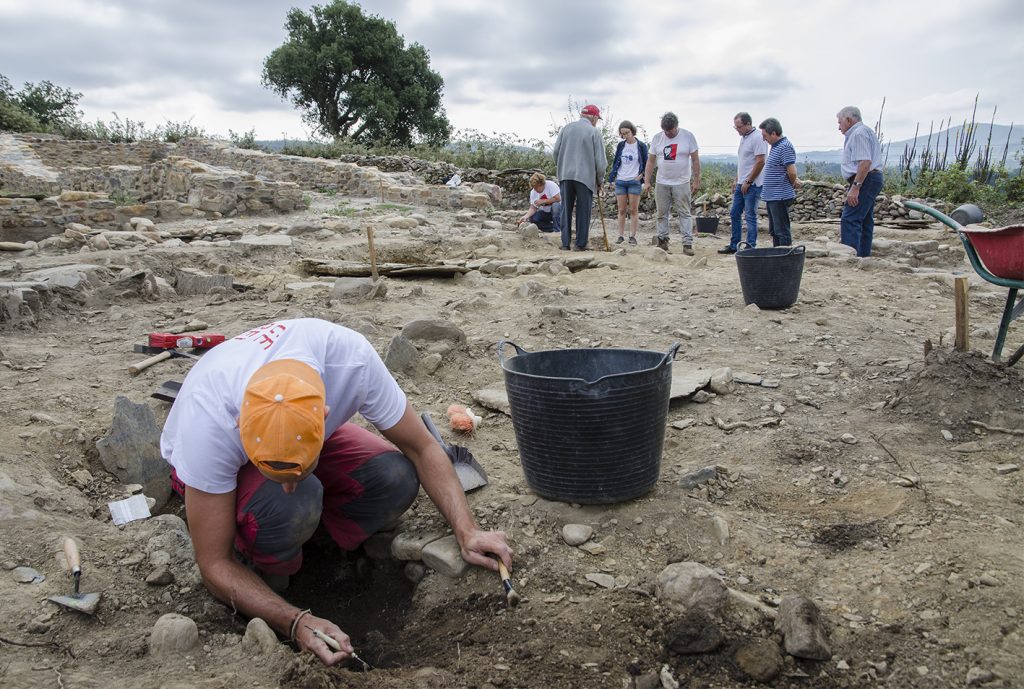
On the eve of ending the fourth excavation campaign taking place in the Castro de San Lourenzo, in Cereixa, the latest findings were made known.
The team led by archaeologist Xurxo Ayán took advantage of the day to exhume several tombs containing human remains. These are remains, in some cases, very well preserved that will offer information of great value. In one of the tombs, a jawbone was found, presumably of a woman, which preserves many pieces and there is also a complete skull. This type of findings will allow a comparison to be made with “Atilano” exhumed last year.

All the remains that have been appearing in the Castro de San Lourenzo, since the archaeological work began in the summer of 2016, offer important information about the way of life in this area in the 11th, 12th and 13th centuries. Among other things, this work will allow us to delve deeper into the origins of the Ribeira Sacra as a symbolic landscape at this time.

Today they accompanied the team of archaeologists the mayor of A Pobra do Brollón, Xosé Lois Maceda, and other members of the government team. The mayor spoke of the importance of the work being done in San Lourenzo to “understand our history” and insisted that the Castro is also a fundamental tourist resource for the municipality.
This summer, an average of 15 people per day were served through the city council's guided tours, and those interested in the Castro then visit other resources in the city council. Today, a group of pilgrims who spent the night at the municipal hostel visited the Castro. They came from Holland, France, different parts of Spain and within Galicia, Lugo and Vigo. The Castro, in fact, is on the Winter Way route as it passes through the city council.

Tomorrow the fourth excavation campaign ends but the work does not stop. All the finds must be collected, registered and sent to different laboratories and institutions in Galicia, the Basque Country, Germany and Sweden, among other destinations. The tests carried out on the remains will offer information about the diet, age or provenance of these remains. When all studies are completed, the material will be taken to the facilities of the Viladonga Castle for its conservation.
One stage ends, but archaeologist Xurxo Ayán is already thinking about the next one. Work is underway on the search for funding for a new campaign and appropriate arrangements will be made to have a new field of work next year, as this year the international work field was included.