GUIDED TOURS SUMMER 2020
From the City Council of A Pobra do Brollón we offer guided tours in July and August to Cova das Choias, Vilachá de Salvadur (traditional wineries and Os Conventos) and the Castro de San Lourenzo. Click here for more information..
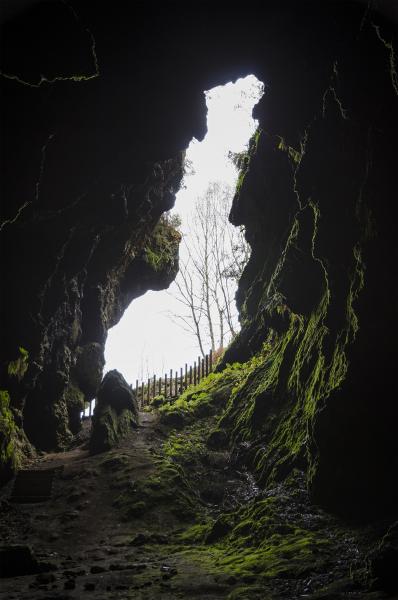
The Cova das Choias is located in Biduedo, in the parish of Óutara. The cave is a natural cave, one of the most unique spaces in the Lemos region. It is possible that in Roman times the cave was altered by man for the extraction of iron ore. It is known that it was intensively exploited, especially in the 16th and 17th centuries, supplying the smithies of the region, mainly the now-defunct Biduedo smithy.
Currently, the cavity has an extraordinary natural wealth in a vulnerable situation: luminescent moss and a population of different bat communities unique in Galicia. The moss which gives the cavity its green color has the peculiarity that it has filaments that reflect emerald green light, producing the visual illusion of luminescence. The presence of this moss in the Iberian Peninsula is documented in a dozen locations. Due to the fragility of the habitats it occupies, this species is included in the Galician Catalogue of Threatened Species as a vulnerable species. We must never extract or step on it to guarantee the necessary conditions of darkness and humidity and so that future generations can continue to admire it.
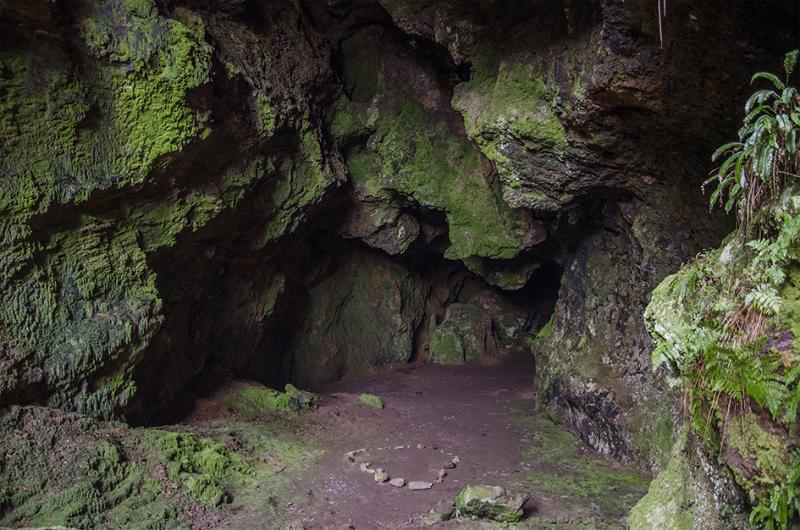
And on the other hand, the birds that inhabit it. The cave gets its name, the Choias, from the presence of these birds of the corvid family, which traditionally occupied the cavity. A few years ago it was thought that they had disappeared, but the measures taken for the conservation of the different species mean that today we can see the choias again. The cavity is also inhabited by different bat species, the cave bat stands out, which has the largest known colony here in Galicia, and the large horseshoe bats that occupy the cave in autumn. These species are in a vulnerable situation and the simple human presence can be detrimental to the conservation of these colonies.
The cave can be accessed through a large entrance that is more than 30 meters high. The cavities form 3 levels that represent more than 200 meters of travel with several dead-end galleries, in addition to artificial galleries for the extraction of iron. Access to the cave is only allowed on guided tours organized by the city council. You can only access the main entrance of the cave, since without knowledge in speleology, access to the caves is dangerous.